
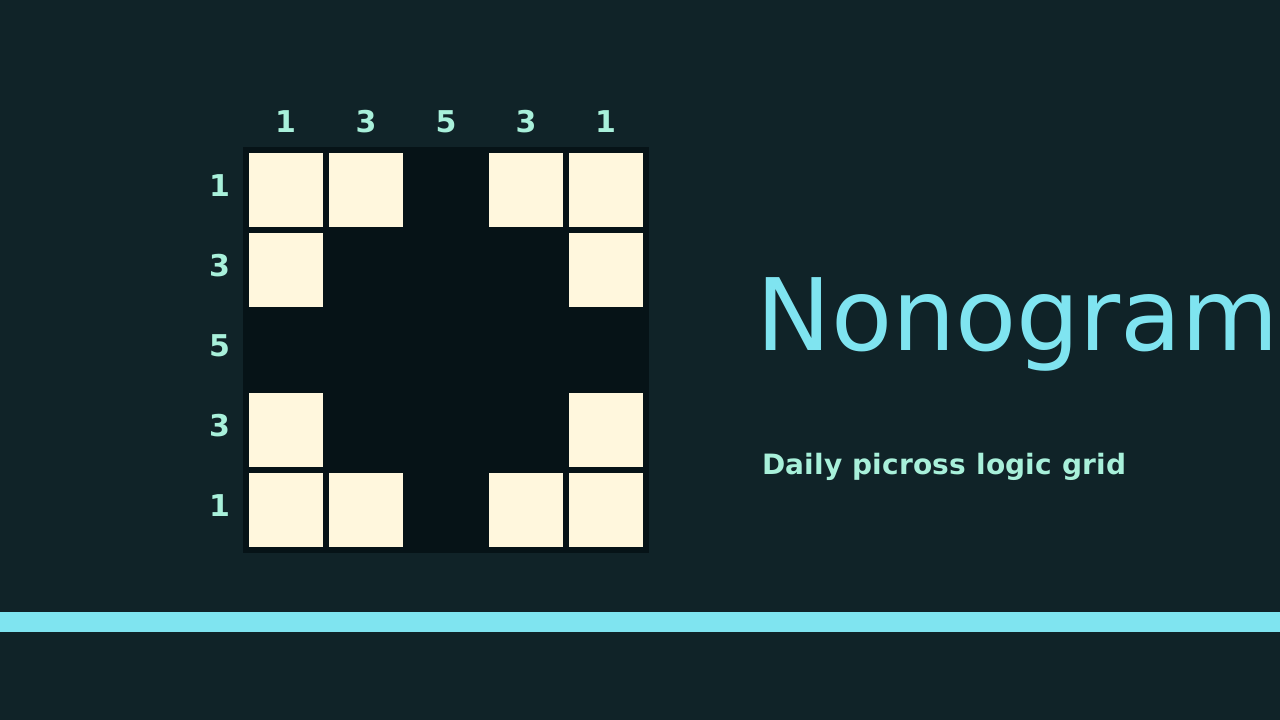
About Nonogram
Nonograms go by many names — picross, griddlers, hanjie, paint by numbers —
but the rule never changes. The numbers beside each row and above each column
list the unbroken runs of filled squares in that line, in order. A row marked
3 1 holds a run of three, at least one gap, then a single square.
Every board here is generated and then run through a solver that is only allowed to reason one line at a time. A board ships only if that solver finishes it, so there is always a next square you can prove without guessing. The daily grid is ten by ten; after it, pick 5x5 for a quick warm-up or 15x15 for a longer sit.
Strategy tips
- Add the runs plus one gap between each. If the total is close to the line length, the overlap between the leftmost and rightmost placements is filled in every arrangement.
- A line whose runs and gaps exactly equal its length has one arrangement. Solve those first.
- Crosses carry as much information as fills. A crossed square splits a line into shorter stretches, and a run that no longer fits in a stretch rules the whole stretch out.
- Work the edges. A filled square touching the border anchors the first or last run of that line.
- When a line stalls, switch to the crossing lines; each new square you place feeds back into both directions.
Controls
Tap to fill a square, or switch to Cross mode to rule squares out; right-click crosses a square on a mouse. Check highlights any mark that disagrees with the clues. For binary deduction on a smaller grid, try Binairo.