
About Scale Guess
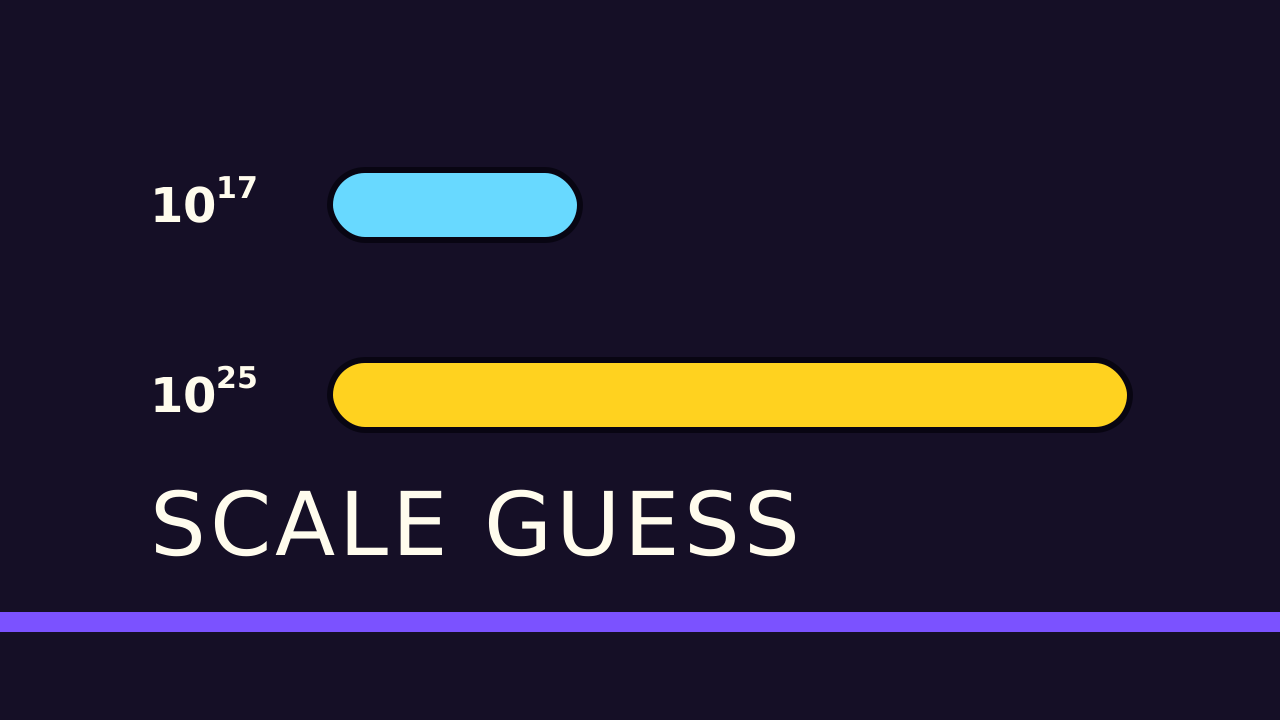
Every AI model is trained by running an enormous number of arithmetic operations, and researchers count them in FLOP: floating-point operations. Scale Guess puts two real models side by side and asks which one needed more. The range is hard to picture. AlexNet, the 2012 image classifier that set off the deep-learning boom, used about 4.7 × 10^17 FLOP. Recent frontier language models are estimated at 10^25 to 10^27, tens of millions to billions of times more.
How to play
- Read both cards and tap the model you think took more compute to train.
- The reveal shows both totals on a shared log scale, how many times bigger the winner was, and a short note on each model.
- Ten pairs make the daily set. They start far apart and end close together, and everyone gets the same ten each day.
- Finish the set to keep your streak, then carry on in endless mode, where one wrong answer ends the run.
Reading the numbers
10^25 means a one followed by 25 zeros. Each step of the exponent is ten times more work, so the bars use a log scale: equal distances along a bar are equal multiples, not equal amounts.
Where the data comes from
The figures come from Epoch AI’s Data on AI models, shared under CC BY 4.0. Most are estimates, which Epoch rates as Confident (within about 3×), Likely (within 10×) or Speculative (within 30×). Scale Guess only pairs two models when the gap between them is larger than both errors combined, so every answer holds up. For the bigger picture, read our analysis of how much compute 540 famous AI models took. If the AI race appeals to you, try Singularity Rush.